
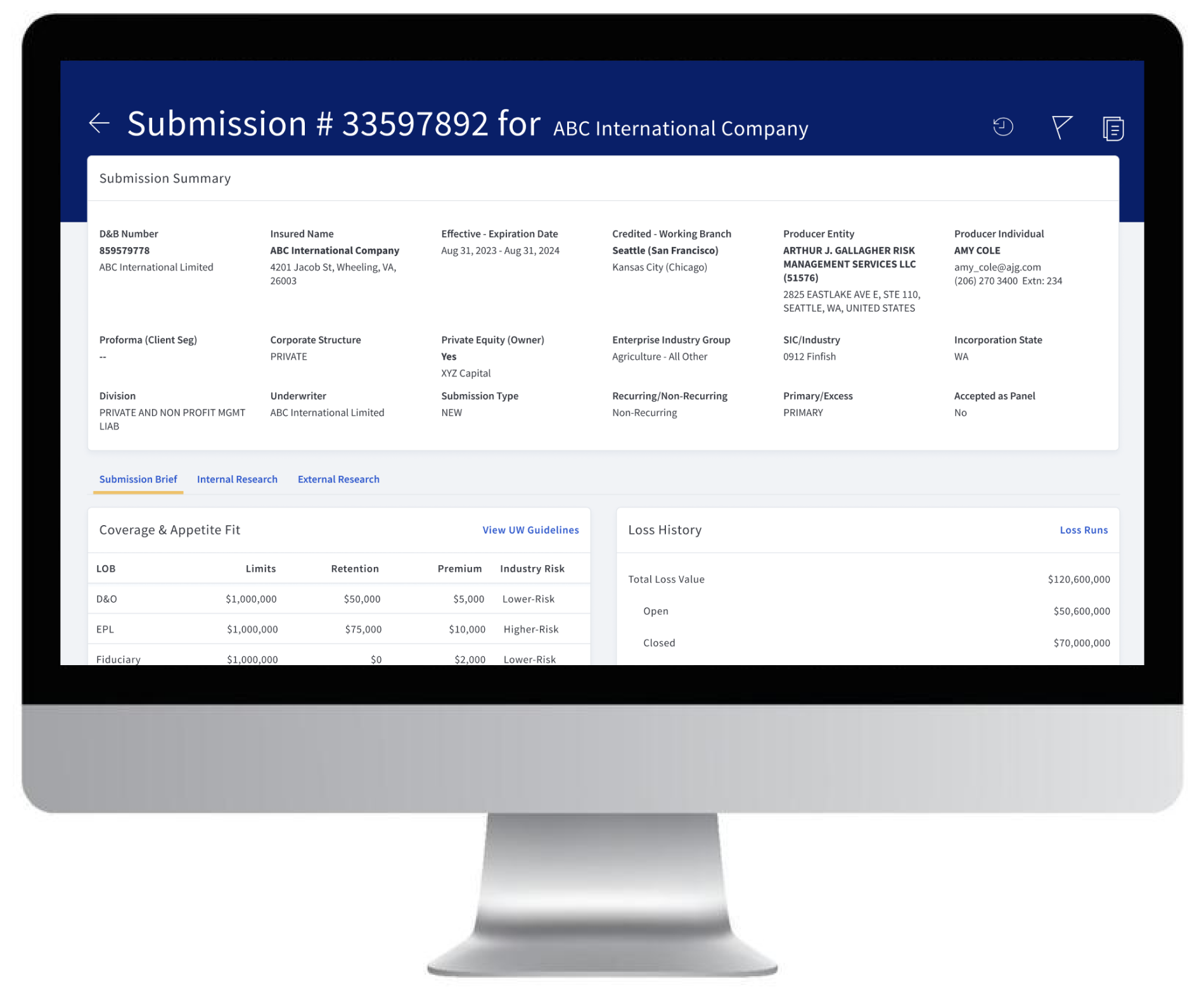
Challenge:
Commercial insurance underwriting is a knowledge-intensive process that requires underwriters to review hundreds of pages of submissions, financial statements, engineering reports, and historical loss data before making risk decisions. As submission volumes increased and documentation became more complex, underwriters were spending weeks—or even months—collecting information, validating evidence, and synthesizing findings before they could begin evaluating risk. The manual process slowed business growth, created inconsistent decision-making, and limited the organization's ability to scale.
At AIG, we recognized an opportunity to fundamentally redesign this workflow using generative AI—not to replace underwriters, but to augment their expertise. The challenge was not simply integrating an LLM into an existing interface. It required rethinking how underwriters discover information, build confidence in AI-generated insights, verify supporting evidence, and maintain control over high-stakes decisions.
Approach:
As the lead product designer, I partnered with product managers, engineers, AI researchers, and underwriting leaders to define and design an AI-powered underwriting assistant that transformed document-heavy analysis into an interactive decision-support experience. Beyond designing the interface, I helped shape the product strategy, user experience, AI interaction patterns, and trust mechanisms needed for enterprise adoption in a highly regulated environment.
As the product scaled across a dozen lines of business, I took a system-level approach to create design patterns that could be repurposed for multiple product versions. This helped preserve consistency within the user experience and reduce development cost by repurposing existing components.
Outcome:
The resulting product reduced underwriting due diligence from approximately three months to two weeks, enabling teams to evaluate submissions significantly faster while improving transparency, consistency, and confidence in AI-assisted decision-making. The product was successfully released to hundreds of global underwriters and publicized within shareholder meetings and press releases.
AI Underwriter Assist
Duration: 1 year
Scope: Figma, Design Ops, Design Systems, Design Strategy, Prototyping, Product Design, Evaluative Testing
User Research
Key Activities:
Engaged in evaluative testing by crafting prototypes that represented specific underwriting scenarios.
Interviewed underwriters about pain points with the product experience.
Compiled findings into distinct user personas and journey map.
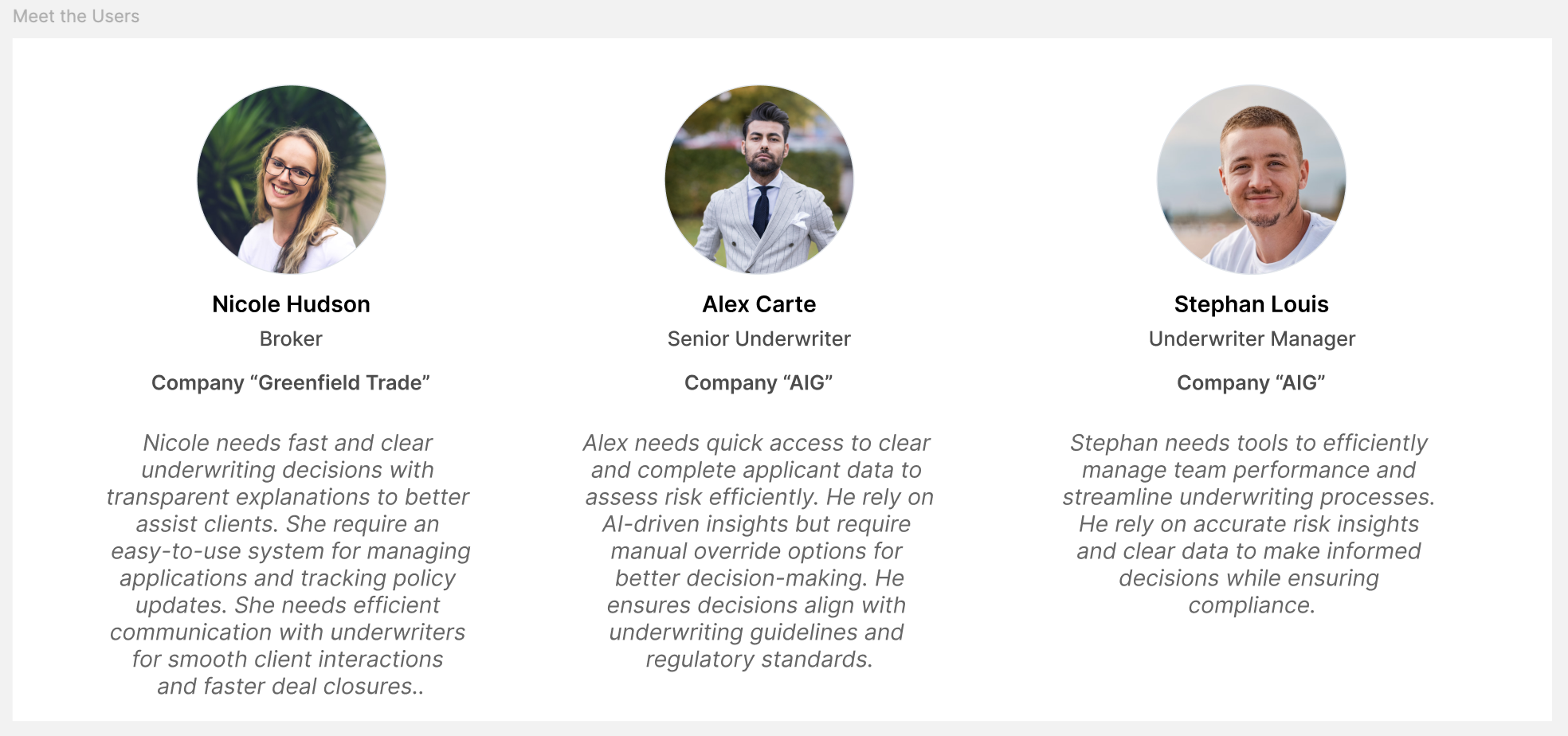
Different personas representing the key stakeholders of the user experience. Underwriters were the direct users and had the most at stake.
Journey Blueprint
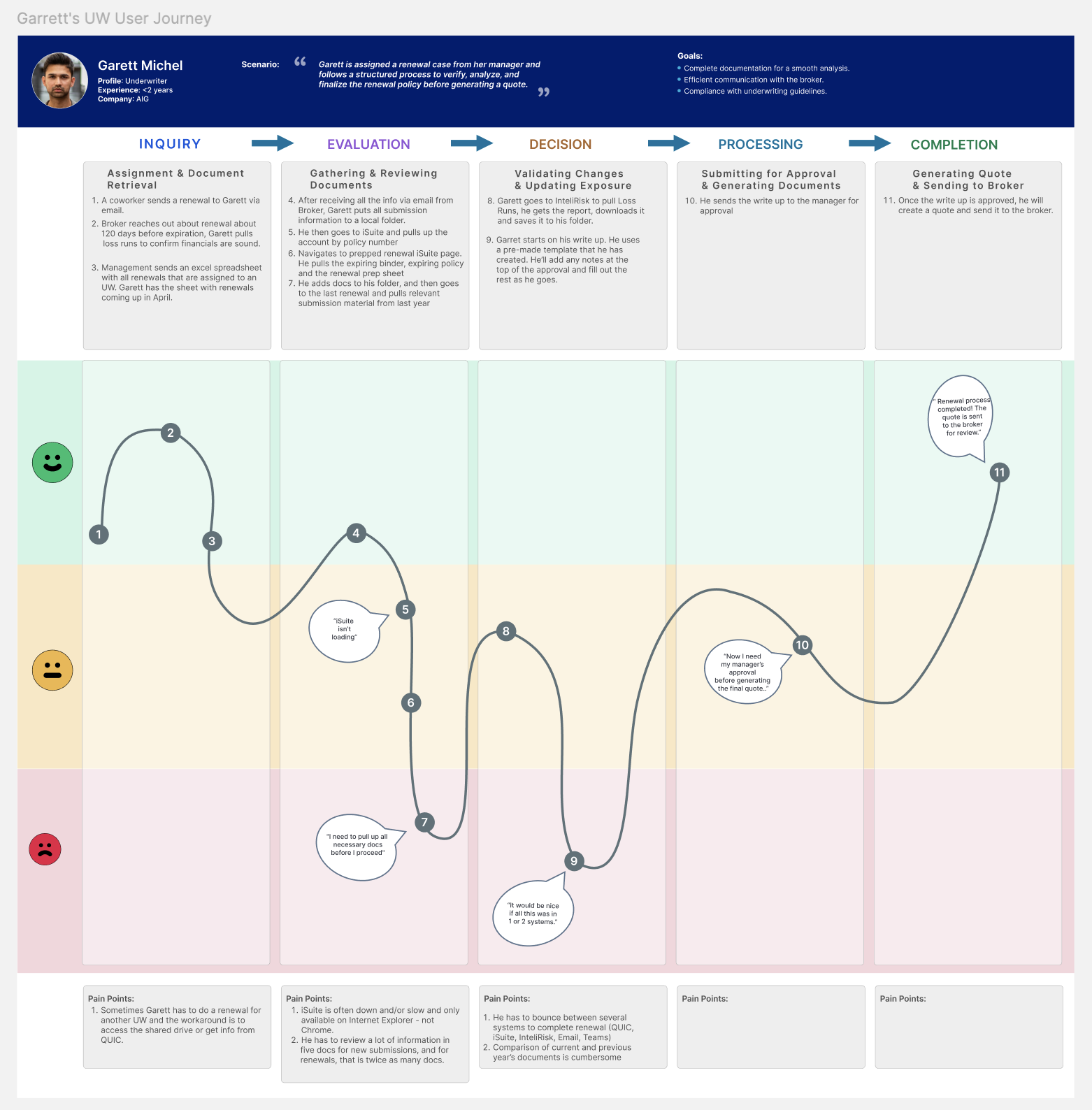
Journey Map expressing the Underwriter’s sentiment and pain points through the underwriting process.
Wireframes
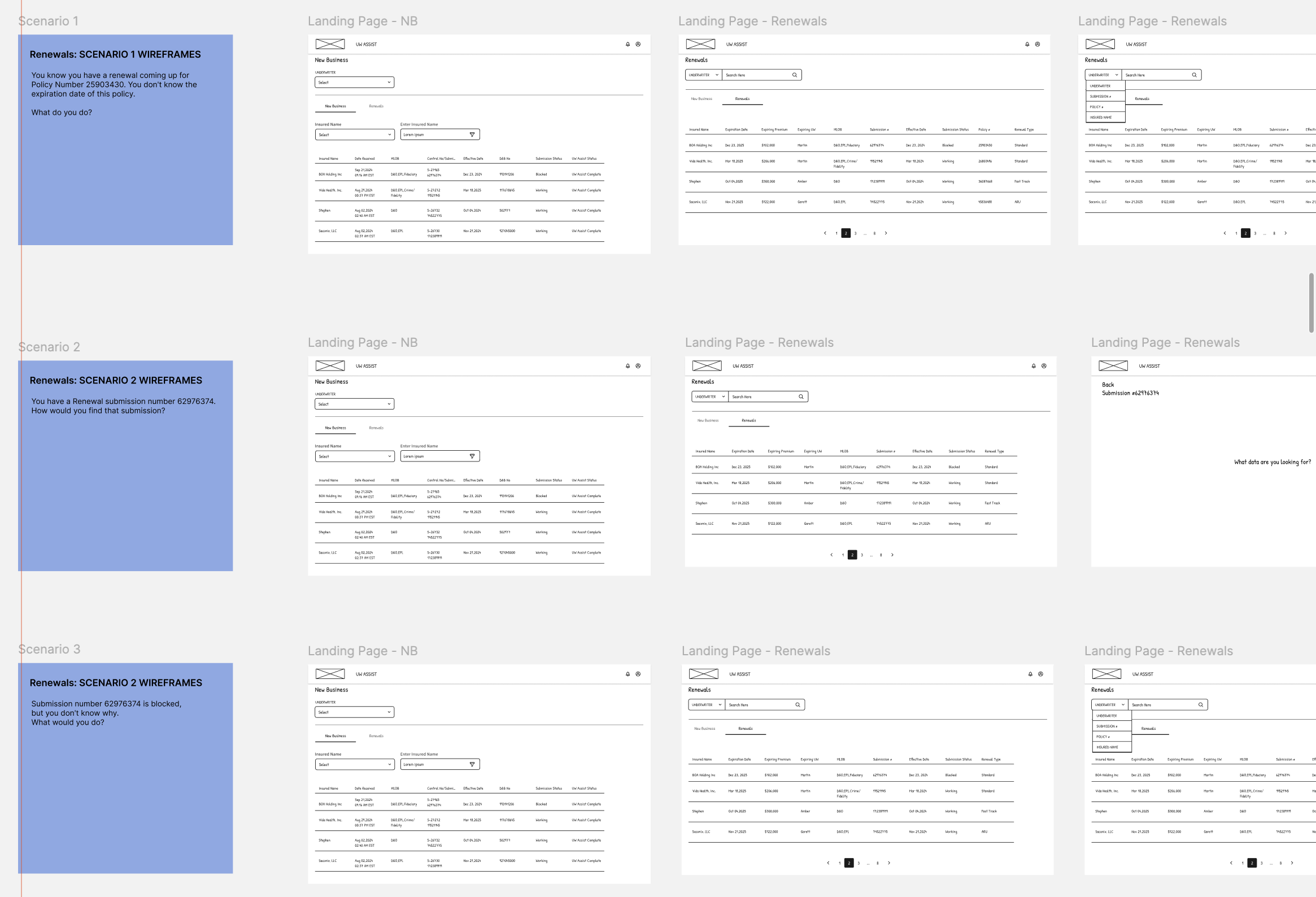
Quick low-fidelity wireframes were used to rapidly construct scenarios for testing with Underwriters.
Design System
Key Activities:
Leveraged an organization-wide design system to build high-fidelity prototypes.
Contributed to the design system by participating in the UX team workshops and knowledge sharing.
Managed local components for the UW Assist product to ensure scalability and interactivity.
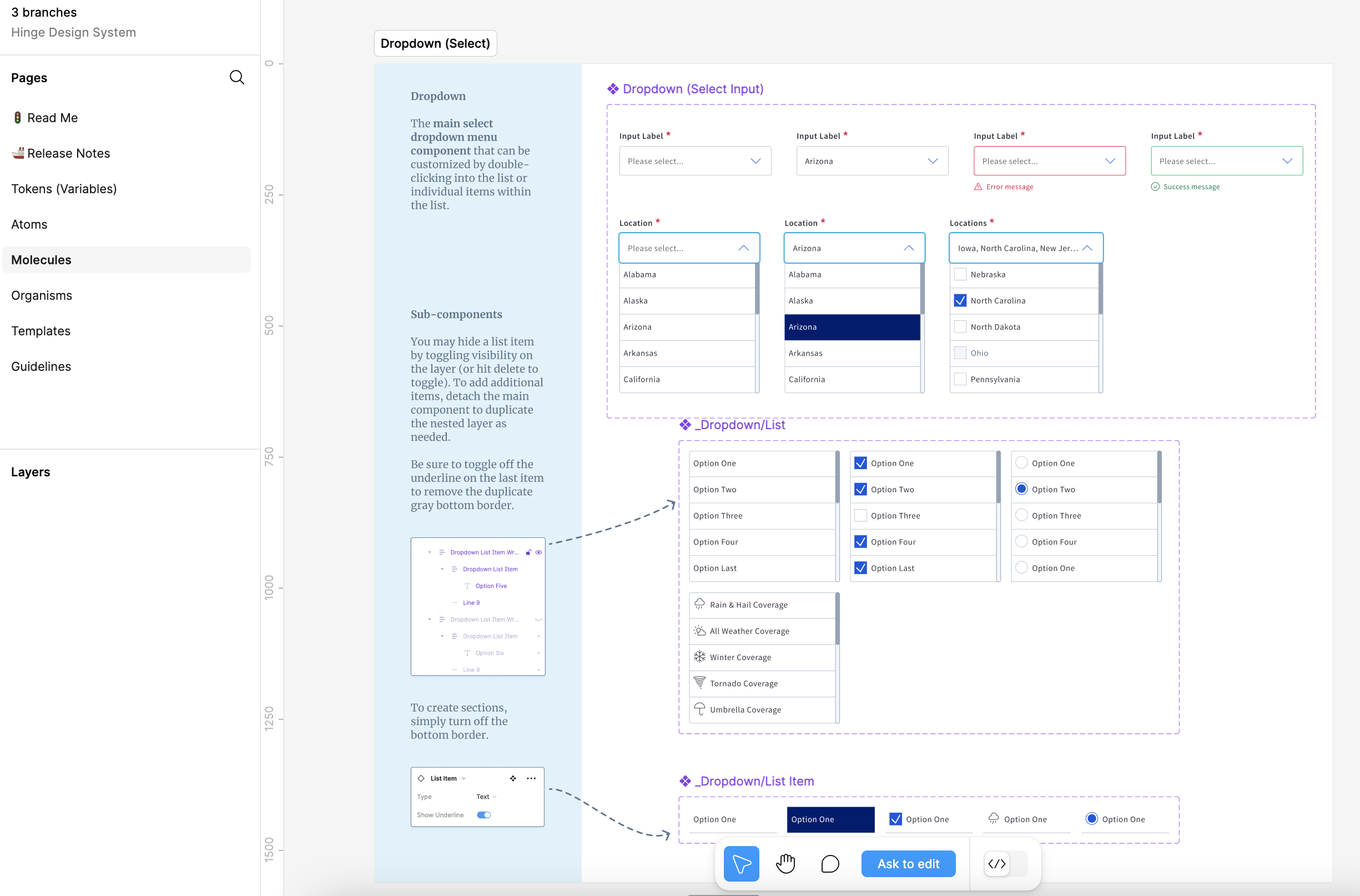
Organization wide component library was leveraged to ensure consistency and feasibility.
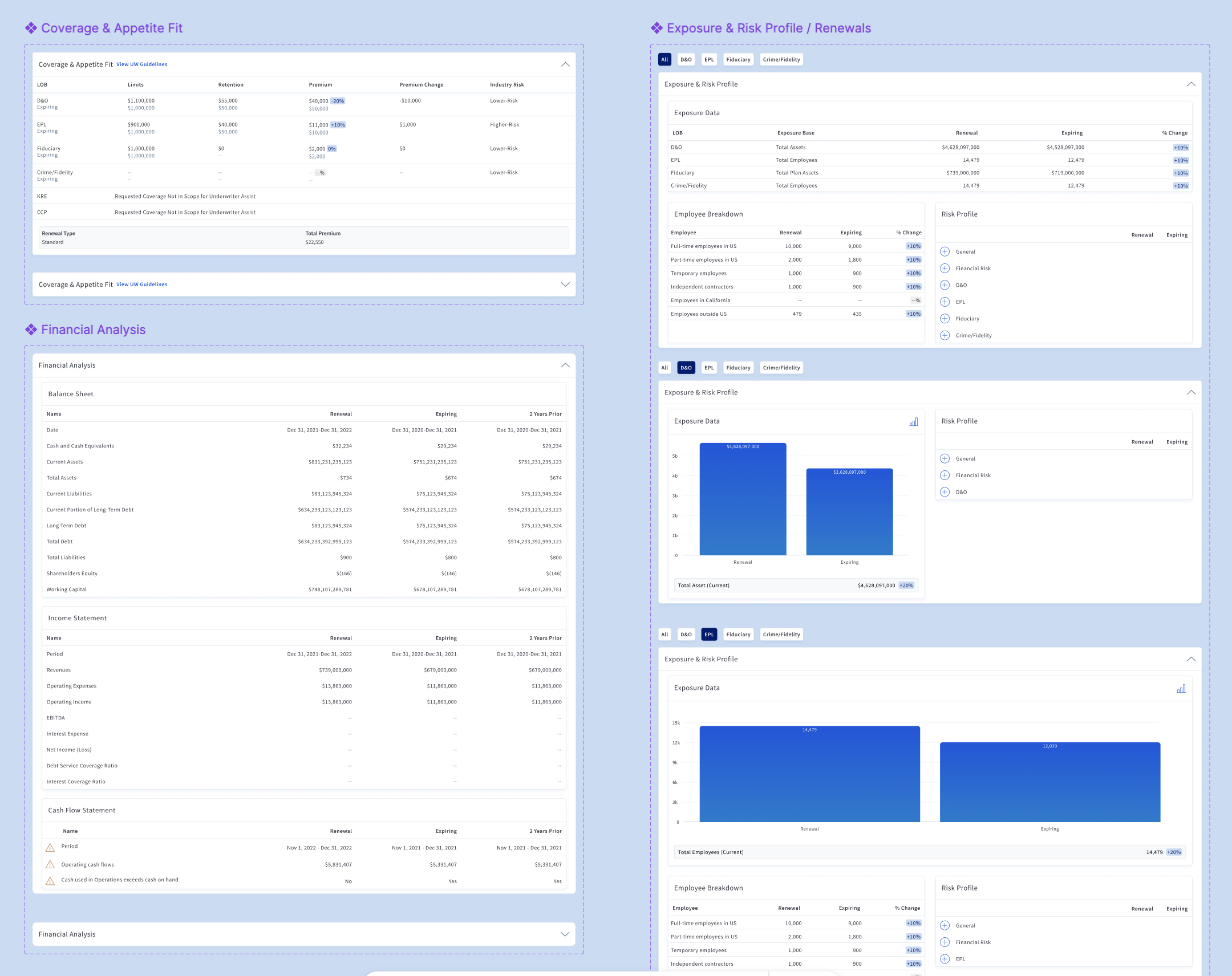
Local components and variables were used to create interactive elements.
Prototype
Key Activities:
Designed high-fidelity screens for the full Underwriter flow and variations for Excess and Renewal submissions.
Presented designs to product owners, underwriters, and other leadership stakeholders to get successful buy-in of proposed designs.
Collaborated with developers to ensure a clear understanding of requirements and smooth delivery, modifying designs when needed.
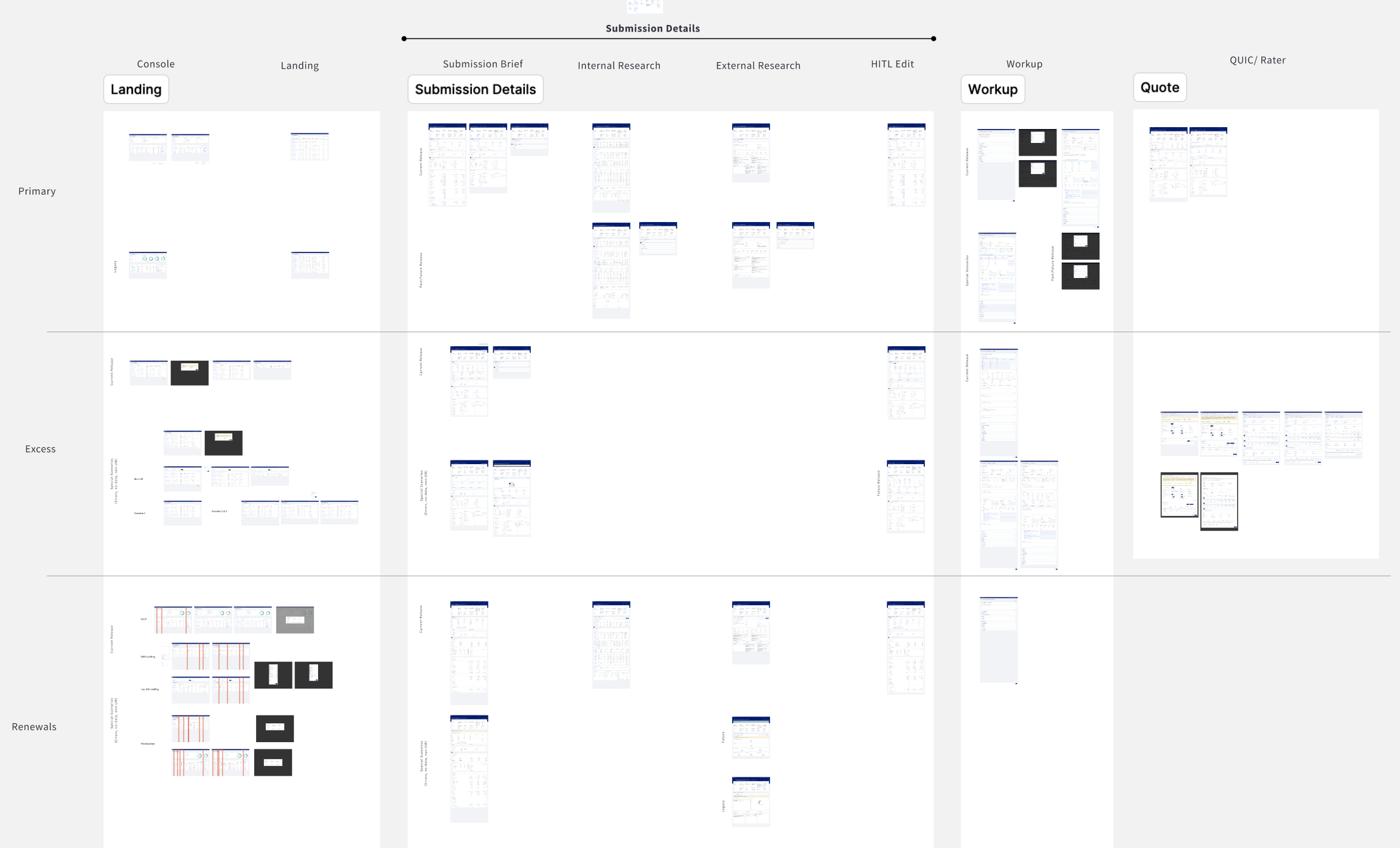
I organized screens to reduce redundancies and allow for easier search and location of screens.
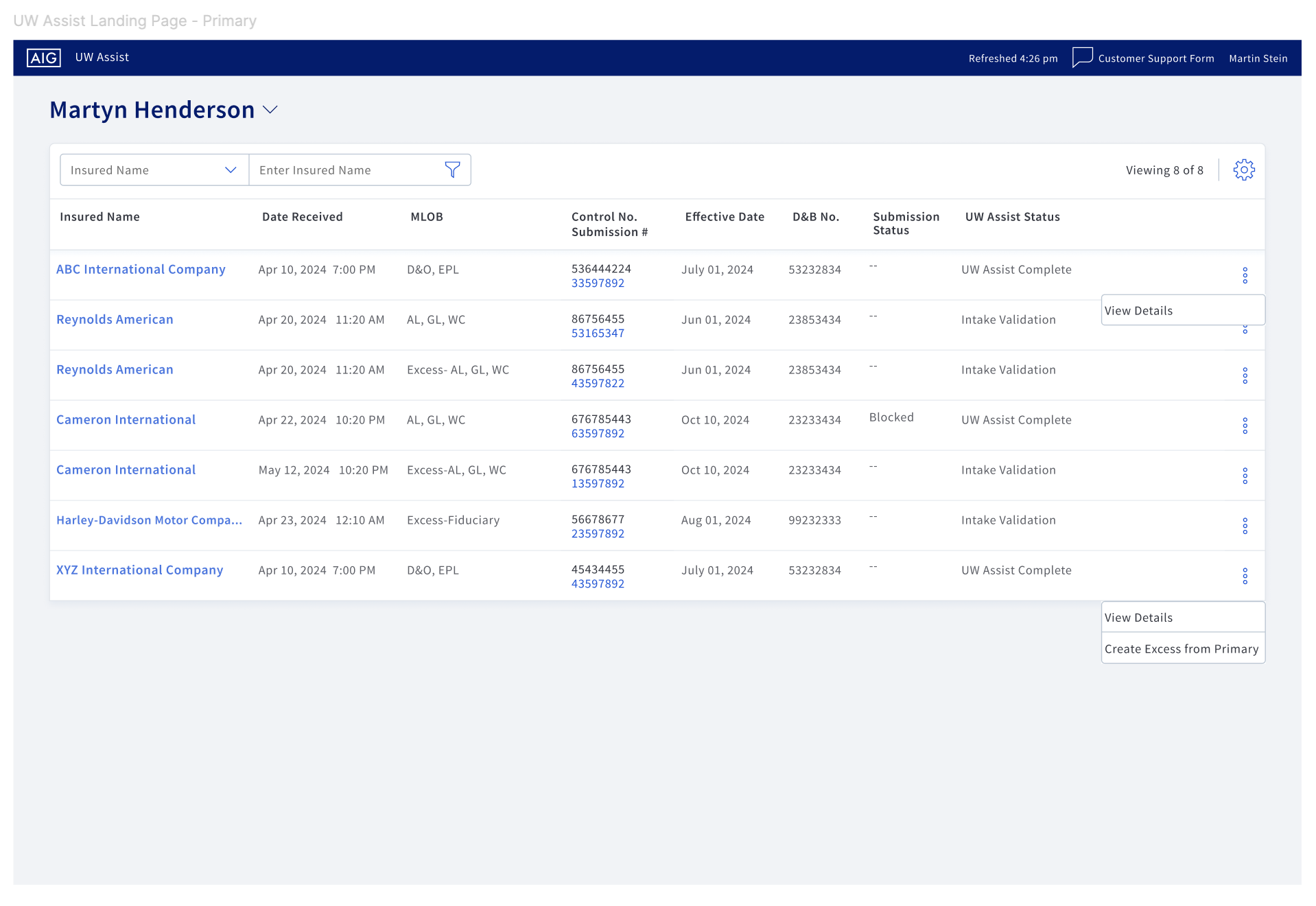
Landing page redesigned to accommodate the creation of Excess Submissions off of the creation of Primary Submissions.
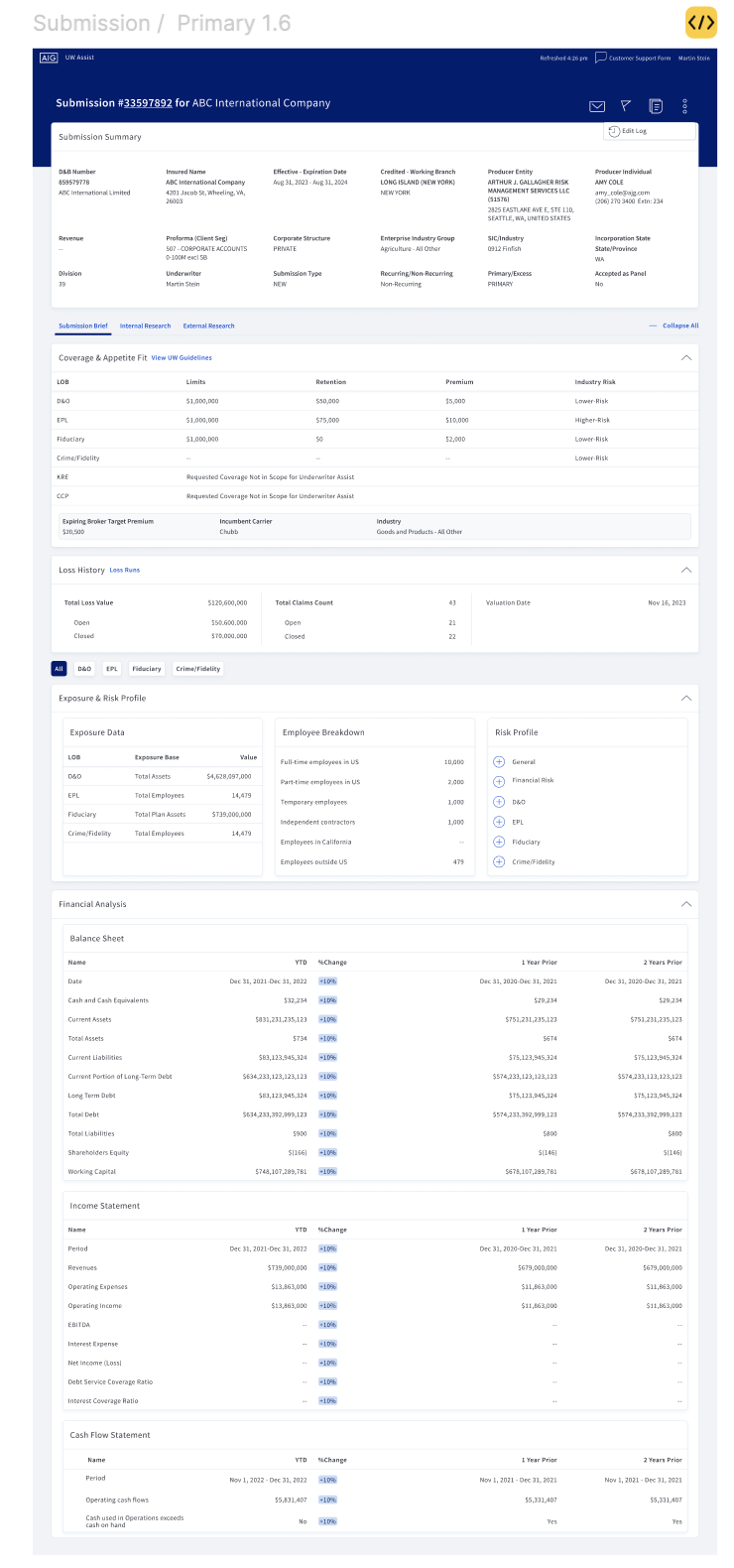
AI generated fields necessary for the underwriting process.
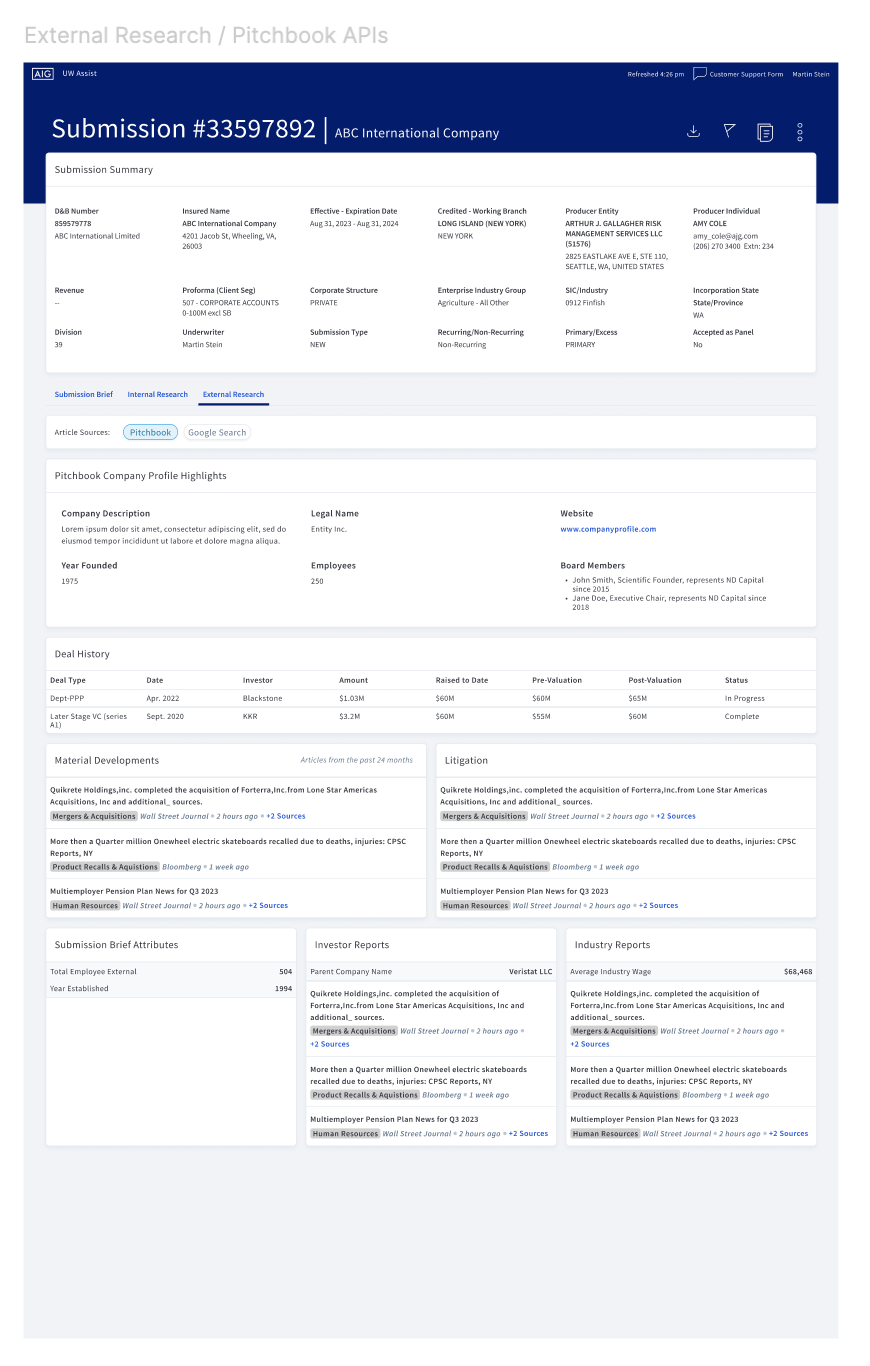
The AI model scrapes external data from the internet and generates values here for the Underwriter to review.
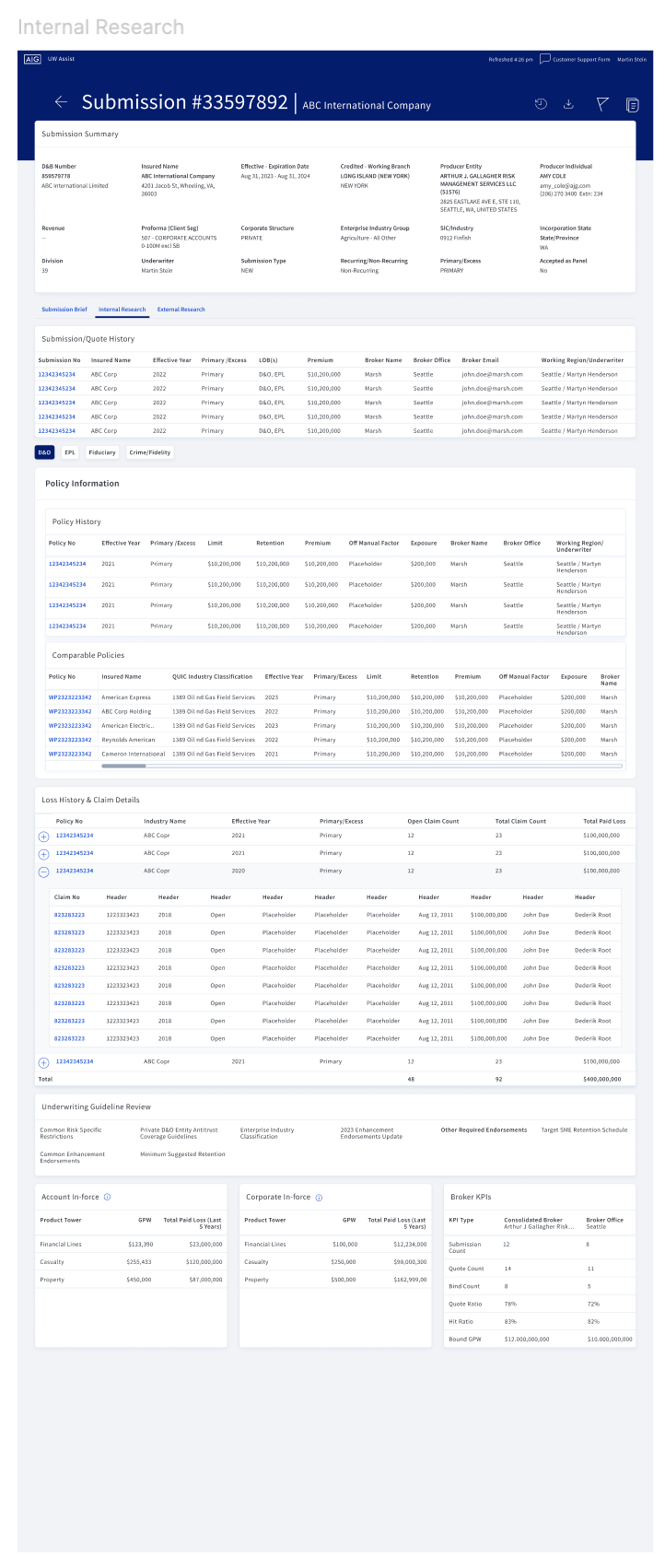
The AI model scrapes data from internal systems and generates values for the underwriting process.
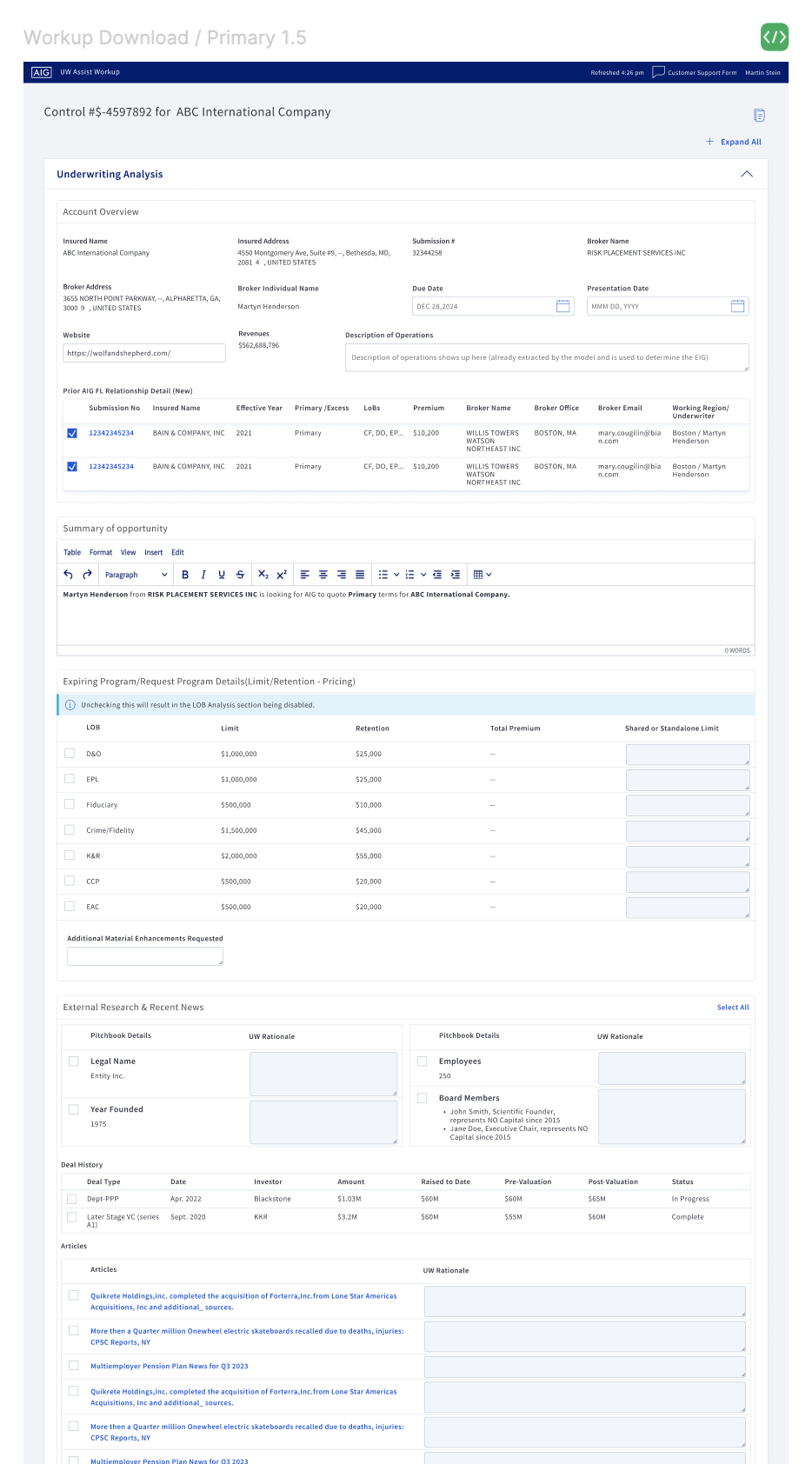
The Underwriter can export the submission after reviewing the relevant content to share.
Gen AI prototype using Claude and AI FDE to create a working communication center application.